
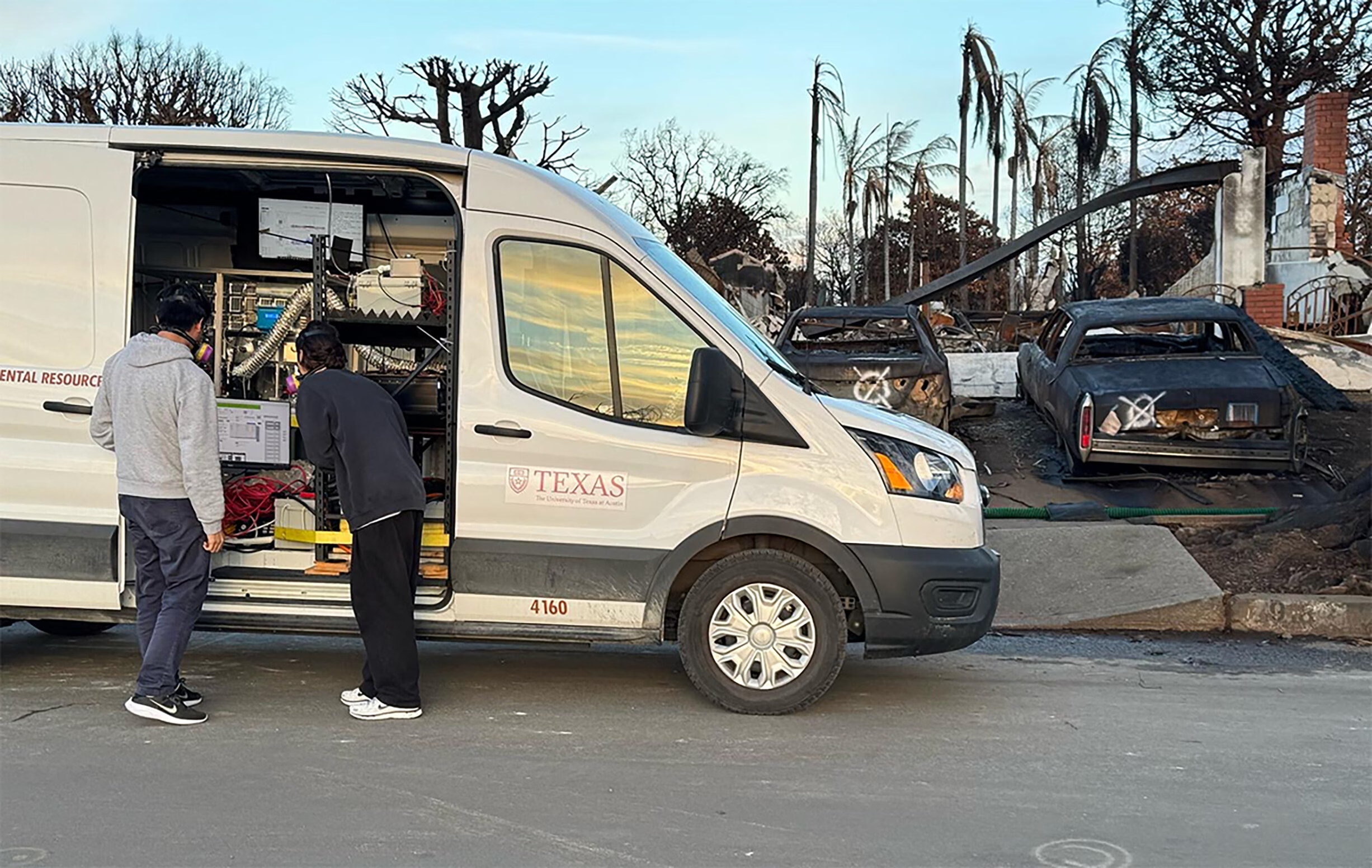
A new article in PNAS highlights the importance of research by LA Fire HEALTH Study and similar studies investigating the long-term health impacts of wildfire smoke. PNAS spoke with Pawel Misztal from the University of Texas at Austin about his team’s work to measure the air quality in fire-impacted communities in Los Angeles over the past year as part of the LA Fire HEALTH Study Consortium.
As Misztal cruised through the burned-out streets of Altadena, his instruments sucked in outdoor air through narrow polymer tubing to identify compounds. When Misztal drove by charred debris, or downwind of blackened houses, he saw spikes in various airborne chemicals on his laptop, whirring beside him on the passenger seat. That’s “the beauty of real-time data,” he says. The instruments draw air through an inlet on the back of the van, detecting short-lived spikes in some pollutants and overall background changes in others.
PNAS also spoke with, Dr. Mary Rice, part of the LA Fire HEALTH Study Consortium, and a pulmonologist studying air pollution and climate at Harvard’s School of Public Health.
“Just being able to see a smoke plume,” Rice says “isn’t necessarily a good indicator” of whether the air is toxic, or for how long. “What are the health effects in the long term for kids and adults? We’re lacking these long-term health studies for the general population.”
Read the full article in the October 21, 2025 issue of PNAS here.