
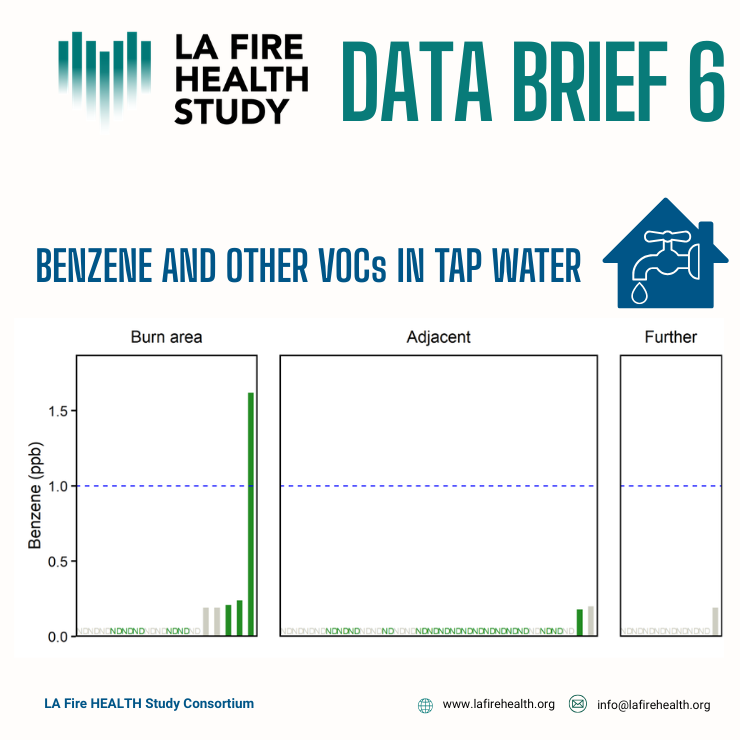
Researchers from the LA Fire HEALTH Study tested tap water from homes in Altadena and Palisades burn areas between February and April, 2025, and found that most had little to no VOCs in the water.
Key Takeaways:
- Most homes tested (53 homes, in/around the burn zones) had very low VOC levels in tap water, after flushing taps for 5 minutes.
- Most VOCs were at such low levels that they were either “not detected” or were below the EPA’s Minimum Reporting Limit, meaning they were too low to get a reliable measurement.
- 1 home out of the 53 tested had benzene levels above the safety threshold of 1.0 ppb.
- If you have concerns about the presence of VOCs or other chemicals in your home’s tap water, flushing, filtering, and testing can all help.
Why this is important: Volatile organic compounds (VOCs) like benzene were found early on in some drinking water after the fires, possibly due to partially burning plastic pipes (like PVC) and contamination from open pipes, which can generate and release these pollutants into the water lines. Benzene and other VOCs can be harmful to health.
Methods: Tap water samples were collected from 53 homes in the Palisades and Altadena areas between Feb – April 2025. Prior to taking the water samples, the homes were “flushed” for 5 minutes to clear stagnant water from pipes.
Results: All but one water sample contained levels of VOCs below the safety threshold of California’s EPA Maximum Contaminant Limit (MCL) for all compounds tested; only one out of 53 samples contained benzene above the MCL (1 parts-per-billion or ppb).
Summary: Most VOCs were at such low levels that they were either “not detected” or were below the EPA’s Minimum Reporting Limit, meaning they were too low to get a reliable measurement.