
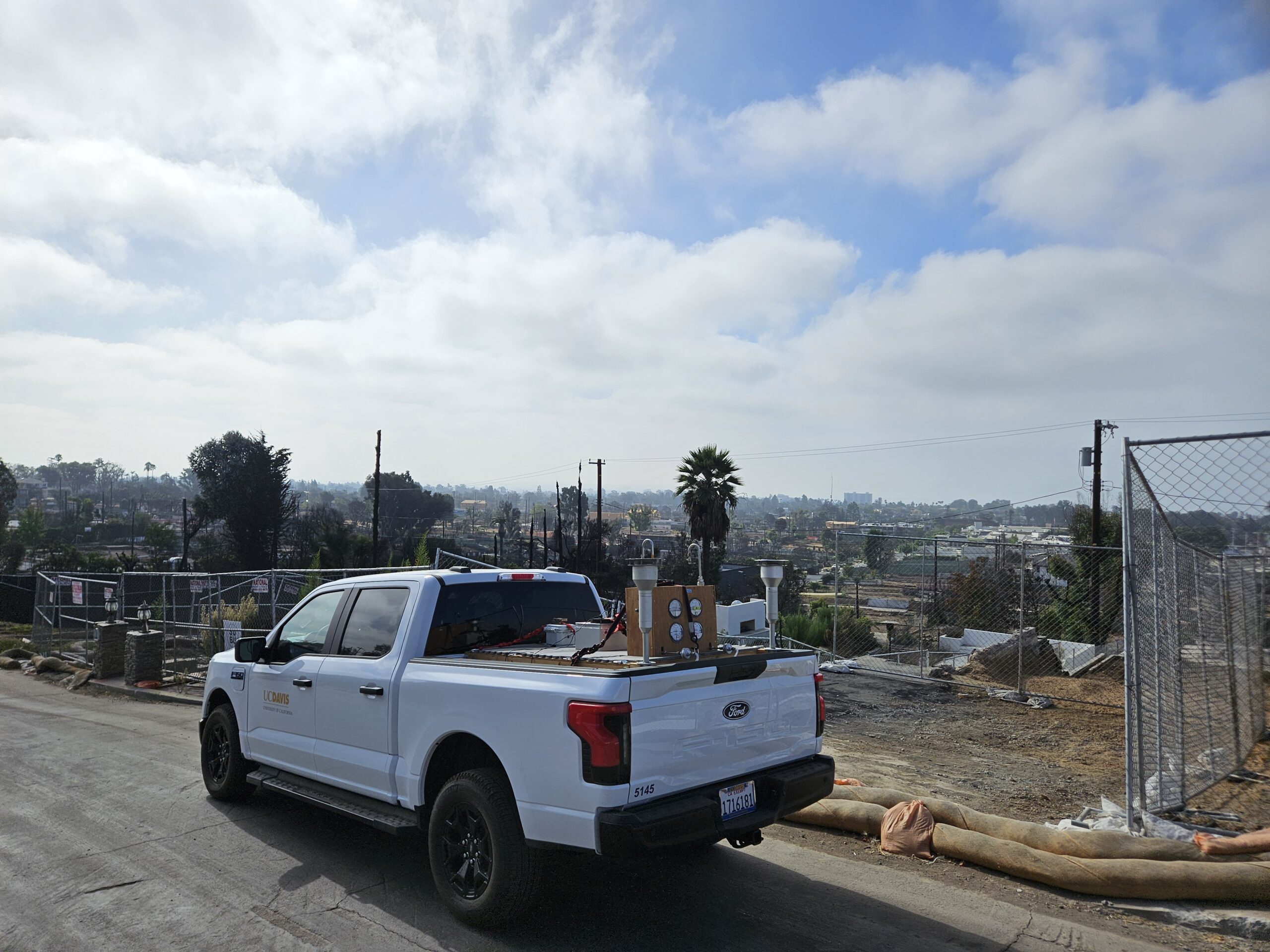
A carcinogen with potentially serious impacts on human health was found in neighborhoods in the months after the 2025 Los Angeles County wildfires and may have spread to communities as far as six to nine miles downwind from the fire zones, according to newly published work by University of California researchers in the peer-reviewed journal, Nature Communications Earth & Environment.
“Hexavalent chromium, or chromium-6, is a toxic metal and carcinogen that can impact the lungs and is associated with asthma, bronchitis, and lung cancer,” said study co-author Michael Jerrett, professor in the Department of Environmental Health Sciences at the UCLA Fielding School and the Jonathan Fielding Chair in Climate Change and Public Health.
Background
Last fall, researchers from the LA Fire HEALTH Study first reported that they had detected Chromium-6 nanoparticles in air samples taken after the LA wildfires in Pasadena and Altadena. Though the data was still preliminary, the researchers felt it was important to share the details before publication with the LA Country Department of Public Health and the general public. Data Brief 7 was published in August, showing elevated levels of Cr-6 in air samples taken in March and April 2025. Follow-up testing in August and September found that Cr-6 levels had dropped down to typical background levels for the LA area. Data Brief 7.1 was published in November with these subsequent findings.
Now, the paper written by researchers about these findings has been peer-reviewed and published in Nature Communications Earth & Environment. The peer-review process is an important step in all scientific research, as it allows scientists from outside the study team to review and vet data.
Significance
“These results are below the official limits set by federal agencies for worker health, but above screening levels for indoor air,” said co-author, Mike Kleeman from UC Davis College of Engineering. “Results were shared early to inform the affected communities. Caution and health surveillance is warranted for nearby residents given that nanoparticles can easily cross cell membranes and circulate throughout the body.”
“Discovering these airborne, chromium-bearing nanoparticles in the wildfire debris cleanup zones is a unique finding that implicates the fires as a source of toxic nanoparticle metals,” added Dr. Kleeman.
Read more from UC Davis and UCLA.
Media Resources
- Brad Smith, UCLA Fielding School of Public Health, bsmith@ph.ucla.edu
- Kat Kerlin, UC Davis News and Media Relations, kekerlin@ucdavis.edu