
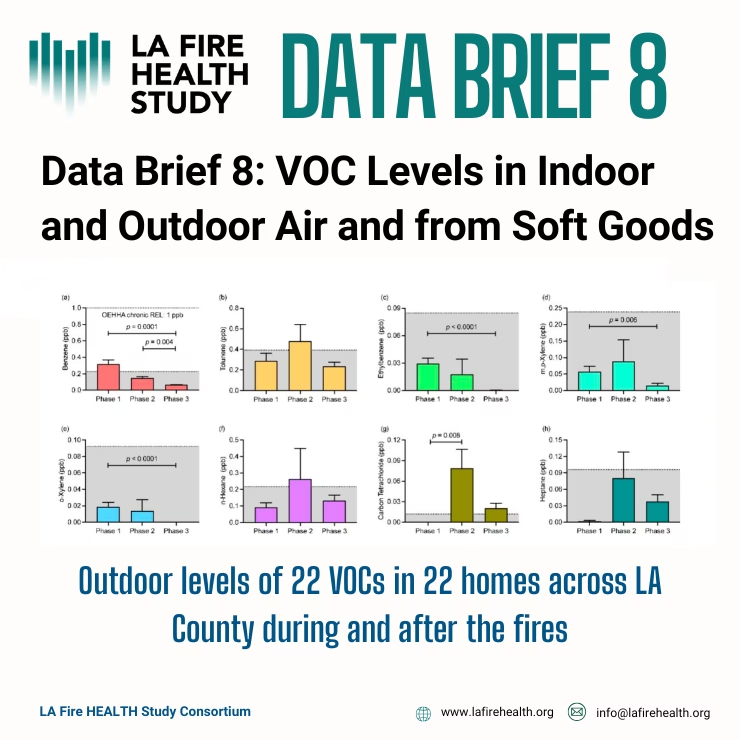
Researchers from UCLA Fielding School of Public Health and Harvard T.H. Chan School of Public Health investigated volatile organic compounds (VOCs) in indoor air, outdoor air, and from soft goods from homes in and near the burn zones in Altadena and Pasadena.
The data in this brief is a summary of findings published in two recent journal articles:
- ES&T Air: Levels and Sources of Airborne Volatile Organic Compounds in Fifty Homes Following the 2025 Los Angeles Wildfires
- Environmental Science & Technology Letters: Indoor and Outdoor Volatile Organic Compound Levels during and after the 2025 Los Angeles Wildfires
Key Takeaways:
- The majority of measured VOCs were below health-based risk limits both indoors and outdoors. Although outdoor benzene stayed below non-cancer reference exposure levels, indoor benzene had potential concern relative to more stringent cancer-risk screening levels.*
- Indoor VOC concentrations were often 10X higher than outdoor levels in postfire homes, indicating prominent indoor emission sources.
- Off-gassing from smoke-impacted materials is a potential driver of prolonged indoor exposure for certain VOCs, such as furan, phenol, and hexane.
- Items stored in cabinets and dressers showed less contamination than items that were out in the open in homes.
- A possible association between indoor naphthalene and wildfire smoke infiltration was suggested, although this finding is limited by the low detection frequency of naphthalene and should be validated in future studies with larger sample sizes.
- Household product use (e.g., cleaning agents) was also associated with certain types of VOCs, such as trichloroethylene and perchloroethylene.
- Recommendations include using professional remediation and abatement companies to clean** soft goods (carpets, furnishings, clothing, etc.) after the fires and using indoor air cleaners (with HEPA plus charcoal filters), and well-timed ventilation to air out homes and let items off-gas.